Tambopata Lodge & National Reserve: Ultimate Guide, How to Get There, Prices & Wildlife
If you are planning a journey into the green heart of southern Peru, the name Tambopata is bound to pop up on your radar.
Unlike other Amazonian destinations that can feel overly commercialized or artificial, the Tambopata National Reserve and its iconic eco-lodges offer a raw, living, and deeply respectful immersion into the low jungle of Madre de Dios.
It is no secret that planning a trip to the rainforest can bring up plenty of doubts:
How do you get there from Puerto Maldonado? How deep do you actually have to navigate down the river? What kind of animals can you realistically spot beyond catalog photos? How much does it cost, and what is the food like in the middle of the wilderness?
Throughout this detailed guide—written from real field experience and tailored purely for the curious traveler—we are going to break down every single one of these points without technical fluff, using natural, fluid language so you know exactly what to expect before you pack your bags.
1. What is the Tambopata National Reserve and Where is Tambopata Lodge Located?
To understand the geographical context, the Tambopata National Reserve spans over 274,000 hectares of primary and secondary tropical rainforests in the Madre de Dios department, bordering the Bahuaja Sonene National Park. It stands as one of the most biodiverse regions on the entire planet.
Various eco-lodges operate within this vast protected paradise and its surrounding buffer zones. Among them, Tambopata Lodge stands out for its strategic positioning:
-
It sits right along the banks of the Tambopata River—far enough from urban civilization to guarantee absolute silence and total disconnection, yet accessible enough that your travel logistics won’t turn into a weeks-long odyssey.
-
While destinations like Manu National Park require multiple days of grueling overland and river travel just to enter the reserved zone, Tambopata allows you to step off a plane in Puerto Maldonado and, within a few short hours, find yourself listening to the chorus of frogs and night insects right outside your wooden cabin.
2. How to Get to Tambopata Lodge: Step-by-Step Travel Times and Logistics
One of the most frequent questions from travelers is how the journey is structured from major cities all the way to the lodge doorstep. The standard route typically breaks down into three main stages:
Step 1: The Connecting Flight
Almost all travelers fly first into Cusco or Lima. From either city, you can catch a direct commercial flight to the Padre Aldamiz International Airport (PEM) in Puerto Maldonado. The flight from Cusco takes a mere 45 to 50 minutes, making Tambopata the most accessible rainforest to combine with the classic Machu Picchu and Sacred Valley circuit.
Step 2: From the Airport to the River Port
Once you land in Puerto Maldonado, a lodge representative or tour coordinator will be waiting for you. From there, you take a short vehicle transfer (usually a 4×4 pickup truck or minibus) taking about 20 to 30 minutes to reach a river port on the banks of the Madre de Dios or Tambopata River.
Step 3: The River Navigation (The True Beginning of the Adventure)
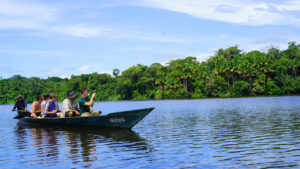
This is where the visual magic truly begins. You board an outboard motorboat (locally known as peke-pekes or fast speedboats, depending on the river stretch).
-
Navigation time: Depending on the exact location of the lodge within the Tambopata territory, the boat ride upriver can take anywhere from 45 minutes to 2.5 hours.
-
What to see along the way: As you cruise the coffee-colored waters of the river, it is very common to spot river birds like egrets, cormorans, river gulls, and—with a bit of luck—caimans sunbathing on sandbars or families of capybaras (the world’s largest rodents) peeking out from the riverbanks.
3. Fauna and Flora: What Animals Can You Spot at Tambopata Lodge?
If you are traveling in search of real wildlife sightings, Tambopata does not disappoint. Because human pressure is minimal in this territory, animals retain their natural wild behaviors.
The Macaw Licks (Collpas de Guacamayos)
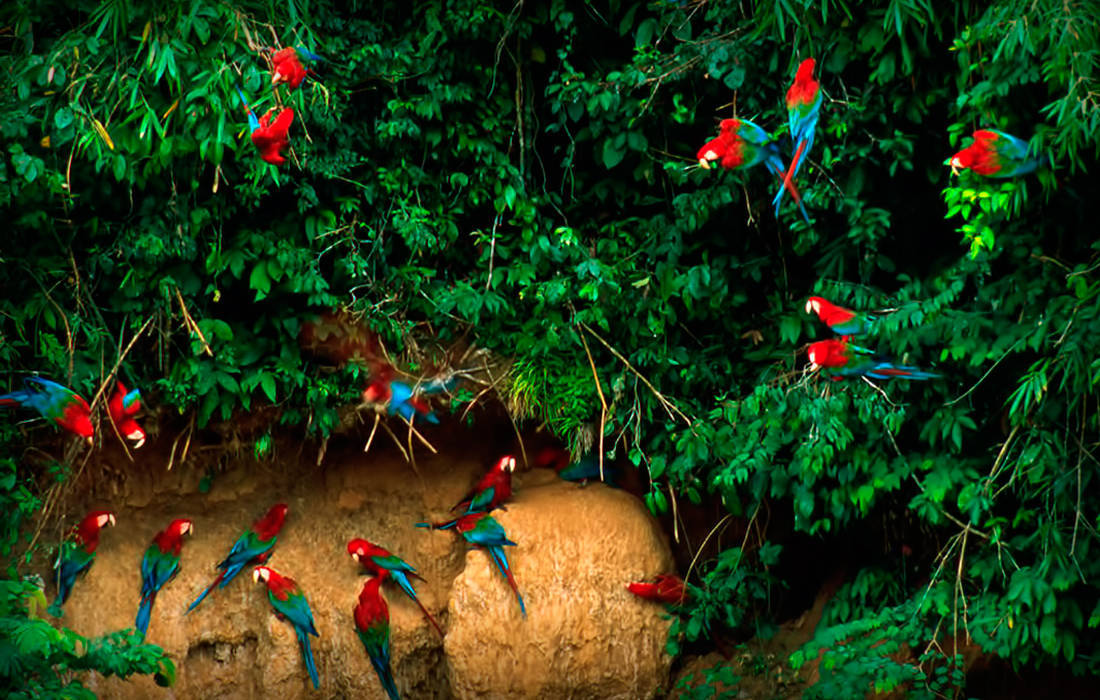
One of the most breathtaking biological attractions in the reserve are the clay licks. These are steep clay walls located along riverbanks where hundreds of parrots, parakeets, and macaws (such as the scarlet macaw and the blue-and-yellow macaw) gather every single morning.
-
Why they do it: They consume the clay to neutralize the toxins found in the green seeds and fruits that make up their daily diet.
-
The experience: Arriving early in the morning by boat, shutting off the engine, and witnessing the explosion of color and deafening calls of hundreds of birds circling before landing is undoubtedly one of South America’s most unforgettable sights.
Mammals and Night Life
-
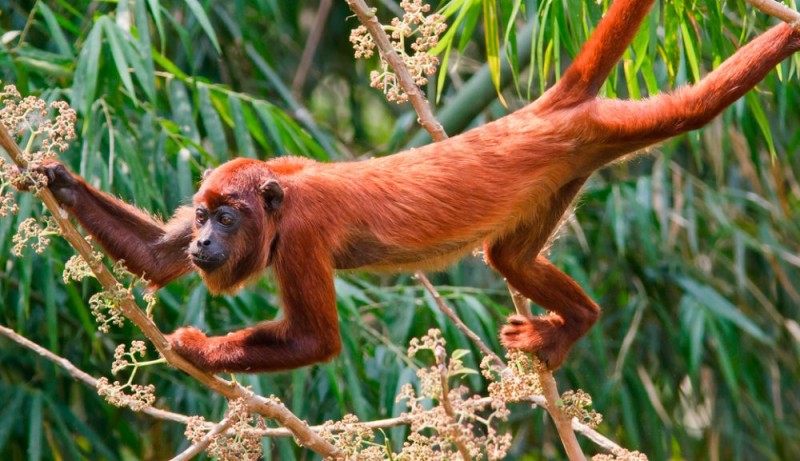
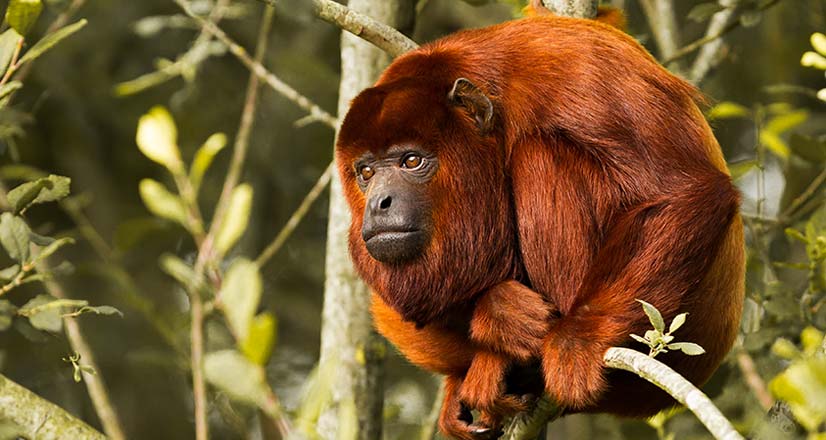
Monkeys: During guided hikes through the lodge’s trail system, it is standard practice to encounter troops of squirrel monkeys, noisy howler monkeys (whose roars echo for miles), capuchin monkeys, and elusive night monkeys.
-
Felines (Jaguars and Pumas): While these animals are naturally shy and hard to spot due to their solitary, nocturnal habits, the Tambopata basin hosts one of the healthiest wild jaguar populations anywhere. Fresh tracks in the sand are frequent, and luckier travelers occasionally spot one crossing the river.
-
Night walks: When the sun goes down, the jungle shifts guard. Equipped with flashlights, local guides will lead you into the darkness to discover impressive tarantulas, glass frogs, bioluminescent insects, and arboreal snakes.
4. Food, Gastronomy, and Lodge Amenities
A major concern for international travelers is how food logistics and comfort work out deep in the jungle. Fortunately, standards at Tambopata Lodge are tailored to deliver a comfortable experience without breaking the ecological pact with the surrounding environment.
What is the Food Like in Tambopata?
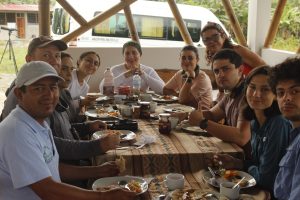
The menu blends traditional Amazonian ingredients from the Madre de Dios region with national and international culinary techniques:
-
Breakfasts: Hearty and energizing, featuring made-to-order eggs, freshly baked bread, pancakes, seasonal tropical fruits (papaya, pineapple, local bananas, cocona), natural juices, and high-grown Peruvian coffee.
-
Lunches and Dinners: Dishes built around local staples like paiche (the giant freshwater fish), yuca, green plantain (tacacho), chicken, meat, and comforting soups. Vegetarian and vegan options are always available upon prior request, ensuring every traveler eats exceptionally well.
-
Water and Beverages: The lodge constantly provides filtered, purified water to refill your canteens and thermoses, completely eliminating single-use plastic bottles.
Facilities and Power
-
Cabins (Bungalows): Built using local sustainably harvested woods, thatched roofs made of interwoven palm fronds (jatata), and fine mosquito mesh instead of full glass walls, allowing the natural jungle breeze to flow freely and keep you cool.
-
Electricity: Being situated inside a national reserve, electrical power generally comes from solar panels or generators operating on set schedules (usually in the evenings to charge batteries and power basic lighting). Do not expect high-speed connectivity or heavy plug sockets in your room; the core concept here is digital unplugging.
5. Approximate Prices and How to Choose the Best Tour
The cost of an expedition to Tambopata Lodge varies depending on the number of days (the sweet spot is a 3-day / 2-night or 4-day / 3-night program), the lodge category, and the inclusions.
-
What a standard package usually includes:
-
Ground transfers from the Puerto Maldonado airport and river transportation via motorboat.
-
Lodge accommodation on a full-board basis (breakfast, lunch, and dinner).
-
Professional bilingual guide (Spanish/English) specialized in Amazonian flora and fauna.
-
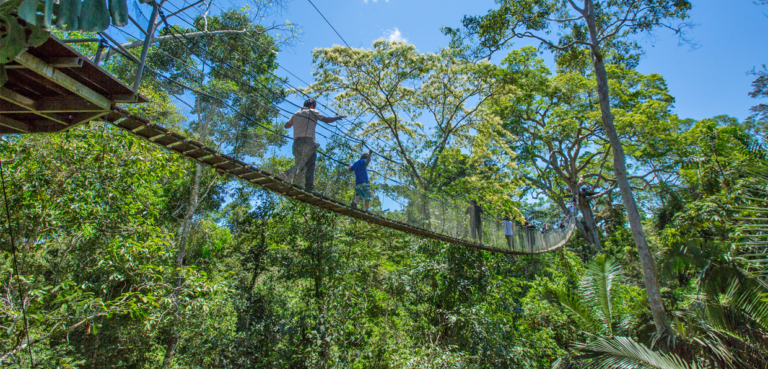
All scheduled excursions (visits to oxbow lakes, macaw licks, night walks, and observation towers).
-
-
Factors that change the price: Lodges located deeper in the reserve (requiring more fuel and travel time) and those offering higher-end room luxuries or private satellite connectivity naturally carry higher price tags. It is always wise to double-check whether Tambopata National Reserve park entry fees are included in the final quote to avoid last-minute surprises.
Practical Tips and Golden Recommendations for Your Trip
Before you lock in your reservation and pack your bag, keep these fundamental tips from experienced jungle guides in mind:
-
The Best Time to Visit:
-
Dry Season (May to October): Ideal if you prefer avoiding continuous rains, walking on firmer trails, and getting prime bird-watching opportunities at the clay licks.
-
Rainy Season (November to April): Though rain falls frequently (usually short, heavy afternoon storms), the rainforest explodes with vibrant green foliage, amphibian and reptile activity peaks, and higher river levels make deep navigation smooth.
-
-
What to Pack Obligatorily:
-
Lightweight cotton or synthetic clothing featuring long sleeves and neutral colors (greens, browns, beige). Dark colors attract insects, while overly bright neon colors spook wildlife.
-
Insect repellent containing a healthy percentage of DEET or Picaridin, alongside sunscreen.
-
A reliable rain poncho or waterproof jacket, especially if traveling during transition months or the rainy season.
-
Quality binoculars (absolute must-haves for spotting birds and monkeys high up in the canopy) and a camera with good zoom or humidity protection.
-
Comfortable trekking shoes or rubber boots (which most lodges readily provide or rent out depending on the season).
-
Exploring the Tambopata National Reserve and staying at a place like Tambopata Lodge isn’t just an ordinary vacation; it’s a pause in time, a lesson in humility facing nature’s immensity, and an experience etched into your memory forever. Are you ready to dive deep into the Peruvian Amazon?