Sandoval Lake Lodge Travel Guide: How to Get There, Location, Fauna, and Food
If you are planning an unforgettable adventure through the southern jungles of Peru, it is very common to combine routes between Manu National Park and the Tambopata National Reserve. While Manu is famous for its remote and untouched wilderness, neighboring gems like Sandoval Lake Lodge complete any deep Amazonian expedition.
To help you understand how this experience connects, what to expect from the journey, exact travel times, and how to plan every detail with practical information, we have put together this natural, human-written guide designed for modern travelers exploring the Peruvian Amazon.
1. Where is Sandoval Lake Lodge Exactly Located?
To put it on the map, Sandoval Lake Lodge is an eco-lodge located in the heart of the Tambopata National Reserve, on the shores of the crystal-clear Lake Sandoval in the Madre de Dios region (near Puerto Maldonado).
Unlike the deeper eco-lodges inside Manu National Park (which can require multiple days of river travel from Cusco), Lake Sandoval is strategically close to Puerto Maldonado. However, it preserves a completely pristine and protected atmosphere because vehicular access is strictly prohibited; it can only be reached by navigating the Madre de Dios River and walking through jungle trails.
2. Travel Time and Transportation: How Do You Get There?
Travel times vary depending on whether you start directly in Puerto Maldonado or combine your route from Cusco:
-
From Puerto Maldonado:
-
First, you take a local mototaxi or transport to the main river port (Puerto Capitanía).
-
Next, a motorized boat crosses the wide Madre de Dios River for about 25 to 30 minutes.
-
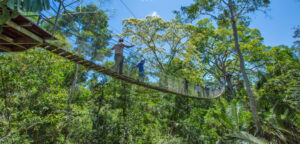
Upon disembarking, you begin a 3-kilometer hike (taking roughly 45 minutes to 1 hour) along a flat boardwalk and dirt trail—a great warm-up to spot your first tropical plants and insects.
-
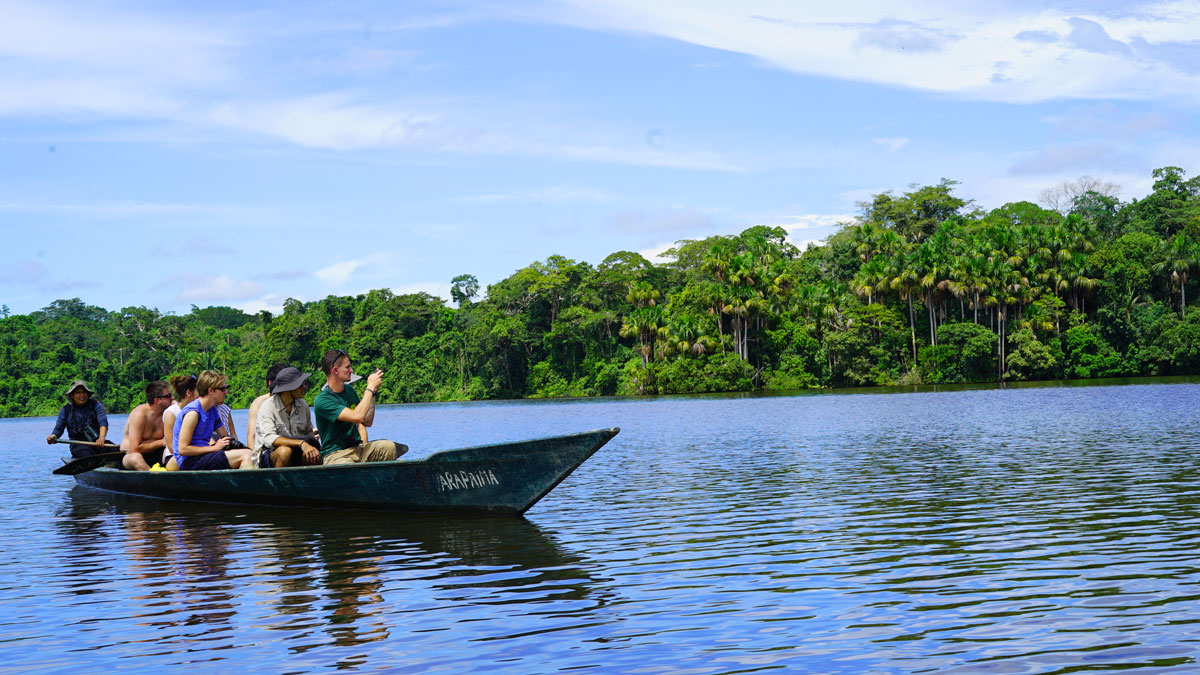
Finally, you reach a narrow canal where you board a wooden paddle canoe (motorboats are banned inside the lake to protect wildlife) that glides across the mirror-like water to the lodge in about 15 to 20 minutes. In total, the trip from the city takes around 2 hours.
-
-
Combining with the Manu Route: Many travelers choose to fly between Cusco and Puerto Maldonado to make this transition seamless, or hire local tour operators that connect overland jungle expeditions from Manu down toward Tambopata. Although they are legally distinct protected areas, both regions share the rich, vibrant biodiversity of the southern Peruvian rainforest.
3. Fauna and Flora: What Animals Can You Spot?
One of the main reasons Lake Sandoval experiences such high traveler traffic and popularity is its incredible wildlife viewing. Because motorized boats are banned on the lake, animals remain largely undisturbed, making close encounters remarkably easy.
The most iconic species you can find here include:
-
Giant River Otters (Pteronura brasiliensis): The undeniable stars of the lake. They usually swim in playful, noisy family groups during the morning hours. Watching them fish and communicate is a breathtaking experience.
-
Black and Caimans: Hidden quietly among the shoreline vegetation at night, their bright eyes glow when caught in a flashlight beam.
-
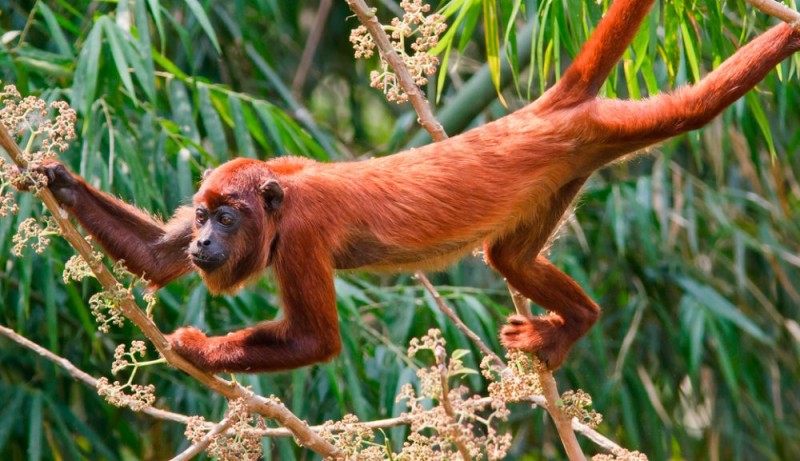
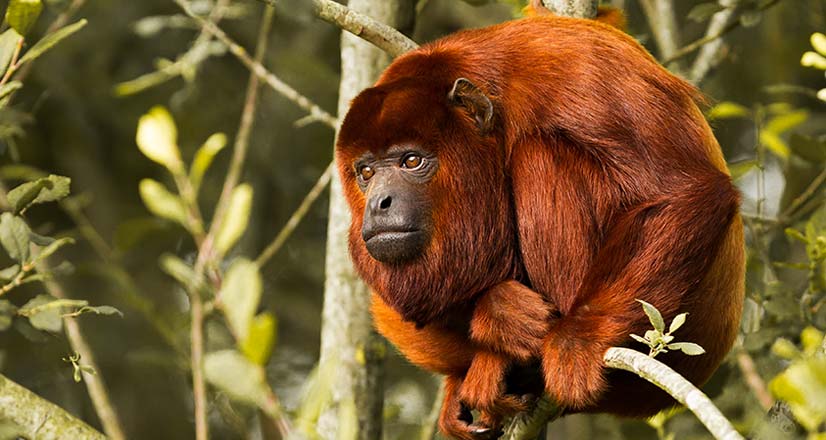
Monkeys: The forest canopy surrounding the lake is home to multiple species, including squirrel monkeys, capuchins, noisy howler monkeys, and saddleback tamarins.
-
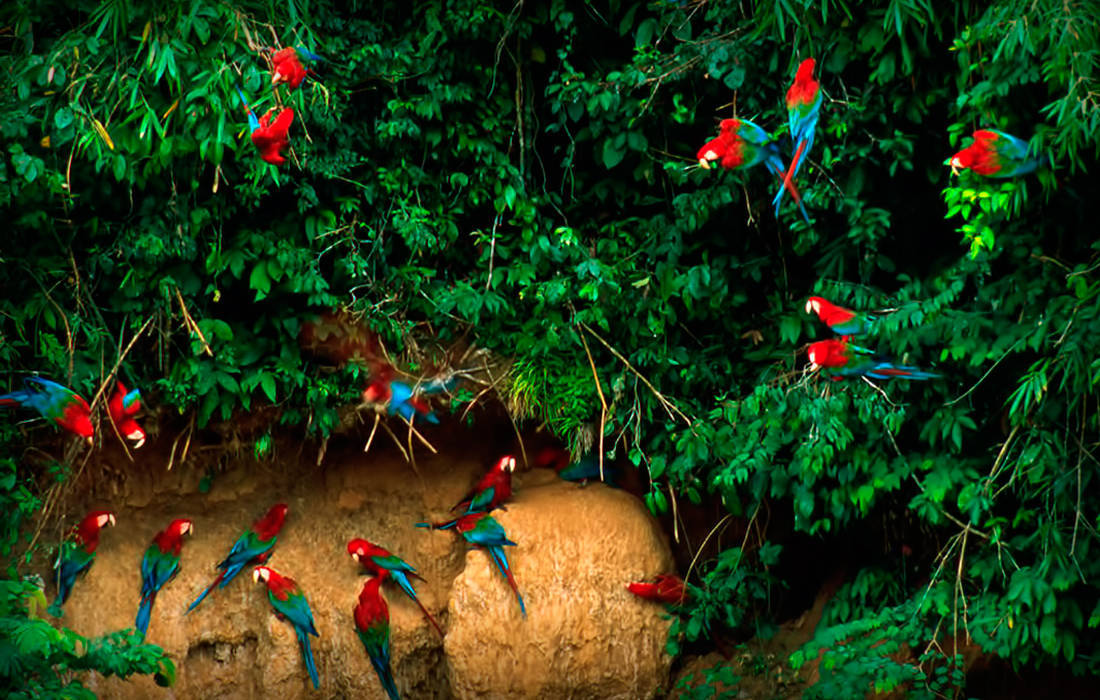
Exotic Birds: A true paradise for birdwatchers and nature photographers. You can spot kingfishers, herons, cormorants, prehistoric-looking hoatzins along the bushes, and occasionally vibrant macaws and parrots flying overhead.
4. Food and Amenities at the Eco-Lodge
As a sustainable, conservation-focused lodge operating deep within a natural reserve, the culinary experience highlights the authentic regional flavors of Madre de Dios:
-
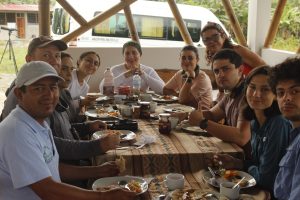
Fresh, Regional Ingredients: Meals are prepared using local harvest staples, blending fresh tropical fruits (such as papaya, cocona, camu camu, and plantains), jungle vegetables, and local fish like pacú or dorado.
-
Varied Menus: Breakfasts typically feature fresh-baked bread, eggs, and Peruvian coffee; lunches and dinners offer comforting soups, hearty mains, vegetarian choices, and homemade desserts.
-
Sustainability: The lodge operates under strict environmental guidelines, managing water and energy responsibly (often via solar setups and zero-plastic policies) to ensure your stay has a minimal footprint on the surrounding ecosystem.
Practical Tips for Your Visit
-
Pack lightweight, long-sleeved clothing: This protects you effectively from both intense sun exposure and insects while walking through the jungle trails.
-
Don’t forget repellent and sunscreen: While the vegetation is dense, mosquitoes are active, especially as dusk approaches.
-
Bring binoculars and a good camera: These are absolute essentials; observing giant otters and colorful birds up close requires proper optical zoom.