Manu vs. Tambopata: Which Amazon Reserve in Peru is Best for You?
When planning a trip to the Peruvian jungle, travelers inevitably face a classic dilemma: should you visit the Manu Biosphere Reserve or the Tambopata National Reserve? Both of these natural wonders are located in southeastern Peru, yet they cater to very different travel styles, budgets, and expectations.
If you are currently mapping out your itinerary from Cusco or Lima, choosing the wrong destination could mean spending your precious vacation days sitting in transit rather than spotting wildlife. Therefore, we have created this ultimate comparison guide to help you decide which Amazon gateway in Peru is perfect for you.
🌎 Location and Accessibility: How Do You Get There?
The way you travel to these reserves is one of the most critical factors to consider, especially if you have a tight schedule.
+------------------+----------------------------------+-----------------------------+
| Feature          | Manu Biosphere Reserve           | Tambopata National Reserve  |
+------------------+----------------------------------+-----------------------------+
| Main Gateway     | Cusco (by road)                  | Puerto Maldonado (by air)   |
| Travel Time      | 8 to 12 hours (overland + boat)  | 1 to 3 hours (flight + boat)|
| Best For         | Slow travel & adventure seekers  | Quick trips & convenience   |
+------------------+----------------------------------+-----------------------------+
Getting to Tambopata: Fast and Direct
First and foremost, Tambopata is incredibly easy to access. The gateway to this reserve is the bustling jungle city of Puerto Maldonado.
-
By Air: You can board a quick 45-minute commercial flight directly from Cusco (CUZ) or a 1.5-hour flight from Lima (LIM).
-
By River: Once you land in Puerto Maldonado, most eco-lodges are just a scenic 45-minute to 2-hour motorized canoe ride down the Madre de Dios or Tambopata River.
-
Consequently, Tambopata is the absolute best option for travelers with limited time who want to maximize their days in the deep canopy.
Getting to Manu: The Epic Overland Journey
On the other hand, reaching the core zone of Manu is an adventure in itself. Since there are no commercial airports inside the reserve, the journey starts in the Andean highlands of Cusco.
-
By Road: You will traverse a dramatic overland route that snakes down from the high Andes (crossing through scenic cloud forests) before finally descending into the lowland rainforest.
-
By River: This journey takes at least 8 to 12 hours, combining overland 4×4 transport with long motorized boat rides along the Alto Madre de Dios River.
-
In other words, Manu requires patience. If you enjoy the journey as much as the destination, this rugged route is highly rewarding.
🐒 Wildlife Viewing: Which Offers Better Encounters?
If your main goal is to spot iconic Amazonian wildlife, both parks will blow you away. However, the way you encounter these animals differs significantly.
Tambopata: Home of the Giant Macaw Clay Licks
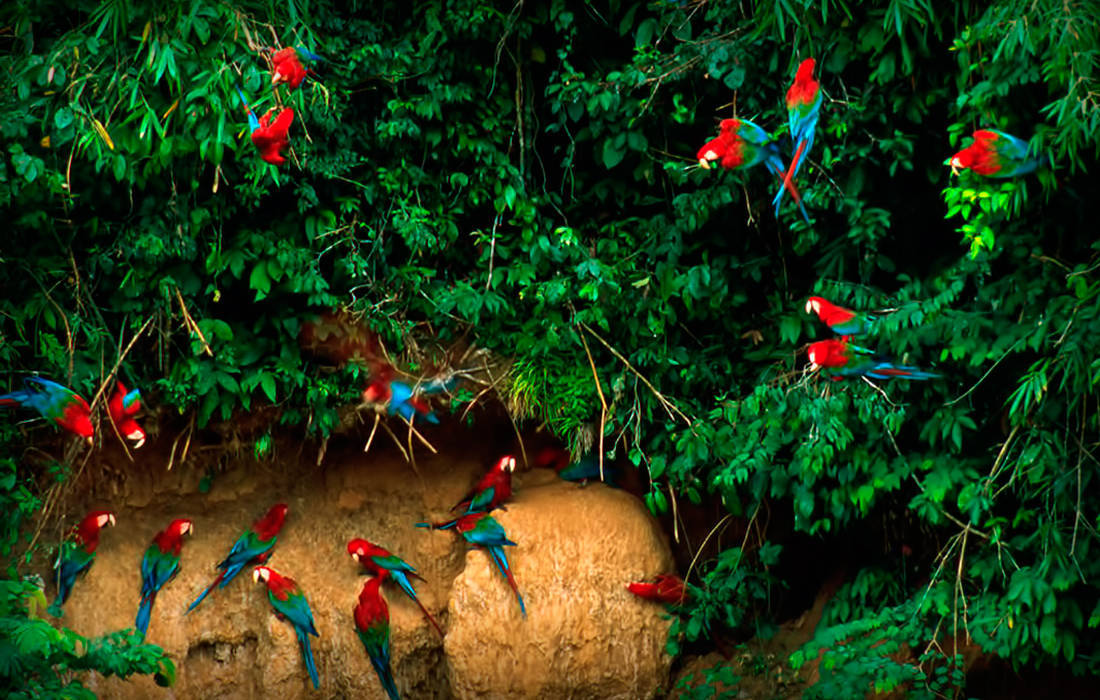
Tambopata boasts some of the highest concentrations of biodiversity on earth. In particular, it is world-famous for its massive clay licks (colpas), such as the Chuncho and Colorado clay licks.
-
The Spectacle: Here, hundreds of brightly colored macaws, parrots, and parakeets gather daily to feed on mineral-rich clay, creating an unforgettable sensory explosion of sound and color.
-
Other Species: Because the lodges are well-established, finding family groups of Giant River Otters in oxbow lakes like Lake Sandoval is highly predictable and relatively easy.
Manu: Pristine, Untamed Wilderness
Conversely, Manu is famous for being one of the most untouched and pristine conservation areas on the planet. Because human impact has been strictly controlled for decades, the wildlife here exhibits remarkably natural behaviors.
-
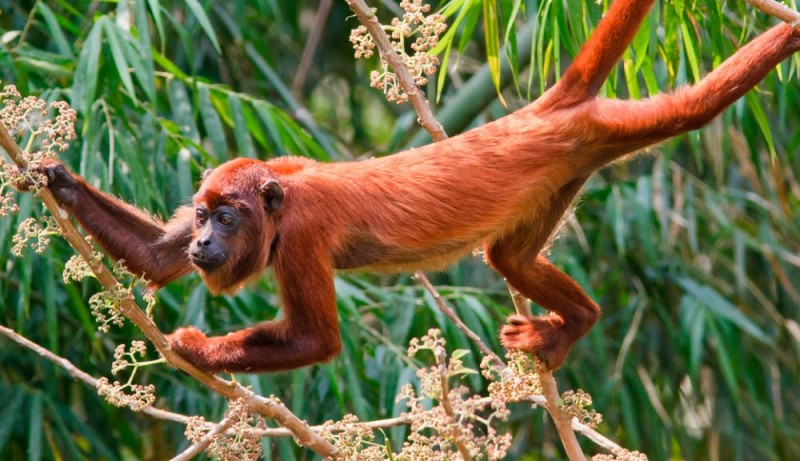
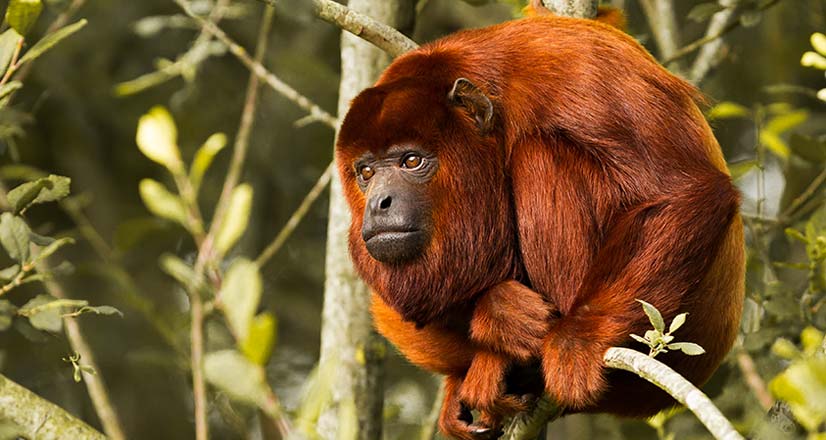
Unmatched Biodiversity: Manu is home to over 1,000 species of birds and 200 species of mammals.
-
The Catch: Since the reserve is so vast and dense, wildlife can sometimes be harder to spot than in Tambopata. Nevertheless, if you are an avid birdwatcher, wildlife researcher, or a traveler looking to spot rare species (like the elusive Jaguar or the Cock-of-the-Rock in its natural lek), Manu is unmatched.
🏨 Accommodation & Comfort: Rustic Adventure vs. Luxury Eco-Lodges
Where you sleep at night plays a huge role in your overall jungle experience. Undoubtedly, your choice between these two destinations will dictate your comfort level.
-
Tambopata’s Premium Comfort: Because of its easy accessibility, Tambopata features some of the finest luxury eco-lodges in South America. Many lodges offer high-speed Wi-Fi, gourmet dining, private plunge pools, and open-wall suites overlooking the jungle canopy. Thus, it is highly recommended for families, honeymooners, and luxury-oriented travelers.
-
Manu’s Rustic Intimacy: In contrast, accommodation in Manu tends to be much more rustic and remote. While there are highly comfortable lodges in the Cultural Zone, deep excursions into the Reserved Zone rely on research stations or basic eco-tents. Therefore, it is geared toward travelers who do not mind disconnected, off-the-grid living in exchange for absolute isolation.
⚖️ The Verdict: Which One Should You Choose?
Choose Tambopata if: You have 3 to 5 days, are traveling with family, want comfortable or luxury lodging, and dream of seeing spectacular Macaw clay licks up close without spending a whole day in transit.
Choose Manu if: You have 6+ days to spare, are seeking a raw, wild, and truly off-the-beaten-path expedition, want to experience dramatic changes in elevation (from the Andes to the Amazon), and prioritize pristine conservation over modern comforts.
🎒 Ready to Plan Your Peruvian Amazon Adventure?
Whether you decide to fly into the modern eco-comforts of Tambopata via Puerto Maldonado or embark on the wild mountain-to-jungle overland crossing to Manu from Cusco, the Peruvian Amazon promises a life-changing experience.
Aquí tienen una selección de 12 Preguntas Frecuentes (FAQs) diseñadas específicamente para el público objetivo de su agencia de viajes.
Están redactadas en inglés (ya que el título del blog está en ese idioma para captar turistas internacionales), utilizando palabras clave de intención de búsqueda y estructuradas con respuestas claras que guían sutilmente al usuario a contactar a su agencia para resolver sus dudas o reservar.
💬 Frequently Asked Questions: Manu vs. Tambopata
1. Which reserve is easier to reach from Cusco or Lima?
Tambopata is much easier and faster to access. You can take a direct 45-minute flight from Cusco (or 1.5 hours from Lima) to Puerto Maldonado, followed by a short boat ride to your lodge. In contrast, reaching the core of Manu requires an overland drive of 8 to 12 hours from Cusco, crossing the Andes before reaching the river boats.
2. How many days do I need to fully experience each destination?
-
For Tambopata: We recommend a minimum of 3 to 4 days. Because travel times are short, a 4-day itinerary allows you to experience the clay licks, oxbow lakes, and night walks fully.
-
For Manu: You will need at least 5 to 7 days. Since the journey to the Reserved Zone takes a full day of travel each way, shorter trips only allow you to see the Cultural Zone.
3. Which Amazon reserve is better for families with kids?
Tambopata is highly recommended for families. Due to its quick flight connections and the high comfort level of its eco-lodges (many of which feature family suites, hot water, and Wi-Fi), it is much more convenient for children. On the other hand, the long, rugged journey to Manu can be physically demanding for younger travelers.
4. When is the best time of the year to visit the Peruvian Amazon?
The best time to visit both reserves is during the dry season, from May to October. During these months, there is less rain, trails are easier to hike, and clay licks are highly active. However, the wet season (November to April) is beautiful for high-water boat navigation and spotting active reptiles and amphibians.
5. Do I need a Yellow Fever vaccination to visit Manu or Tambopata?
Yes, it is highly recommended. The Peruvian Ministry of Health advises all travelers entering the Amazon region (including Puerto Maldonado, Tambopata, and Manu) to have a valid Yellow Fever vaccination certificate administered at least 10 days before arrival. Please consult your local travel clinic regarding malaria prophylaxis as well.
6. Which reserve is more budget-friendly?
Generally, Tambopata is more budget-friendly due to its established infrastructure and shorter transit times. Conversely, Manu excursions tend to be more expensive because of the complex logistics, private land-and-water transport, and park entrance fees required to reach the deep, pristine zones.
7. What are my chances of seeing a Jaguar in the wild?
While jaguars are wild and elusive, Manu’s Reserved Zone historically offers slightly higher chances of sightings along the riverbanks because human presence there is extremely limited. That being said, lucky travelers also spot jaguars sunbathing along the Tambopata River, especially during the dry season.
8. Is there internet connectivity (Wi-Fi) inside the reserves?
-
In Tambopata: Many modern eco-lodges offer satellite Wi-Fi in their common areas, though connection speeds can be slow.
-
In Manu: Once you enter the deeper Reserved Zone, you will be completely off-the-grid. There is virtually no phone signal or internet, making it the perfect destination for a digital detox.
9. What should I pack for a tour to the Peruvian jungle?
No matter which reserve you choose, your packing list should always include:
-
Lightweight, long-sleeved shirts and long pants (to protect against mosquitoes).
-
A high-quality insect repellent (DEET or Picaridin).
-
Waterproof hiking boots or sturdy sneakers.
-
A poncho or rain jacket.
-
A good pair of binoculars and a flashlight/headlamp for night walks.
10. Can I visit both Manu and Tambopata in a single trip?
While physically possible, we do not recommend it unless you have more than two weeks in Peru. Since they are located in different river basins, you would have to travel back to Cusco or Puerto Maldonado to connect, wasting valuable time. It is much better to choose one and dive deep into its unique ecosystems.
11. Are there indigenous communities I can visit in these reserves?
Yes, both reserves offer cultural encounters. In Manu, you can respectfully learn about the Matsigenka culture in authorized communal lodges. In Tambopata, several lodges collaborate directly with the Native Community of Infierno (Ese Eja), allowing travelers to learn about ancestral customs, hunting techniques, and traditional medicine.
12. Can I visit Manu or Tambopata without a registered tour agency?
No, independent travel is not allowed in these protected areas. To enter both Manu and Tambopata, you must be accompanied by an authorized licensed guide and book through a registered tour operator. This ensures visitor safety, respects local communities, and funds the conservation of these delicate ecosystems.